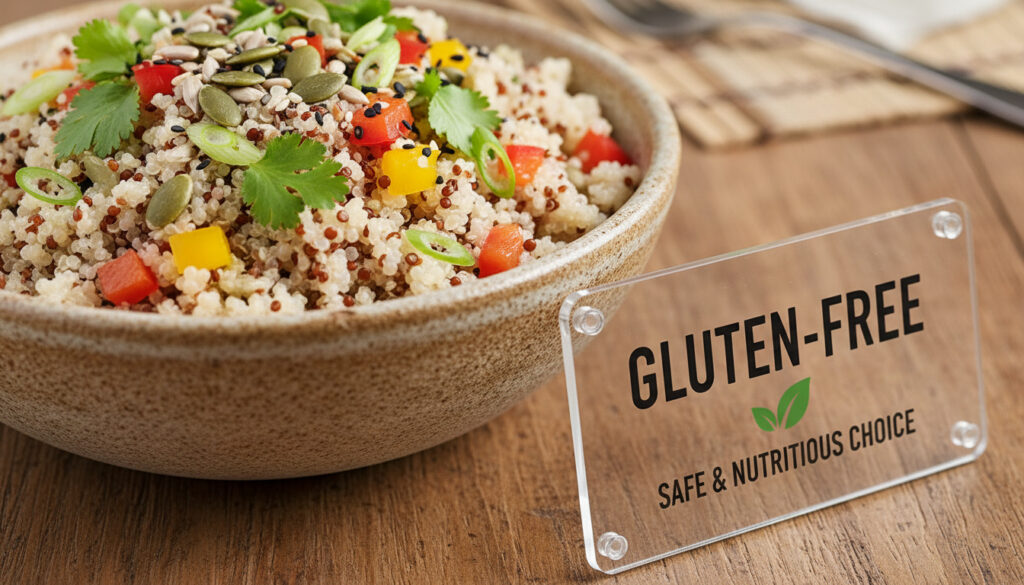
Is Quinoa Gluten Free – Safe Choices for Celiacs
Quinoa stands as one of the most popular alternatives for those avoiding gluten, yet questions persist about its true safety for celiac patients and gluten-sensitive individuals. This pseudocereal, cultivated in the Andean region for thousands of years, naturally lacks the gluten proteins found in wheat, barley, and rye. However, the journey from field to table introduces complications that challenge its reputation as an automatically safe option.
Understanding whether quinoa fits into a strict gluten-free diet requires examining both its inherent biological properties and the modern processing realities that surround it. While the seed itself contains zero gluten, researchers have identified specific varieties and contamination pathways that demand attention from those with celiac disease or gluten intolerance.
This analysis draws on clinical studies, food safety research, and regulatory guidance to provide a complete picture of quinoa’s place in gluten-free nutrition.
Is Quinoa Naturally Gluten-Free?
Zero gluten proteins present in pure quinoa seeds
High during processing in shared facilities
Safe with certified gluten-free labeling
Verify GF certification symbol on packaging
- Quinoa is botanically a seed, not a true grain, placing it in the pseudocereal category alongside amaranth and buckwheat.
- The seed naturally lacks gliadin and glutenin, the protein compounds that trigger celiac disease reactions in wheat, barley, and rye.
- A clinical study tracking 19 celiac patients consuming 50 grams daily for six weeks found no adverse effects or immune responses in the majority of participants, improving overall nutrient intake.
- Research on 15 quinoa varieties identified two specific types—”Ayacuchana” and “Pansakalla”—that stimulated cytokine release mimicking gluten reactions in laboratory conditions.
- Prolamins present in quinoa, while structurally different from wheat gliadin, may still pose challenges for highly sensitive individuals.
- The seed provides a complete protein profile containing all nine essential amino acids, making it nutritionally distinct from most grains.
| Fact | Detail |
|---|---|
| Botanical classification | Pseudocereal seed (Chenopodium quinoa) |
| Natural gluten content | 0% (gluten-free by nature) |
| Clinical trial tolerance | 50g daily for 6 weeks (19 patients) |
| Certification requirement | Required for celiac safety |
| High-risk varieties | Ayacuchana, Pansakalla |
| Protein quality | Complete amino acid profile |
| Preparation requirement | Rinse to remove saponins |
What Are the Risks of Gluten Cross-Contamination in Quinoa?
Processing Facility Hazards
Despite its natural gluten-free status, quinoa faces significant contamination risks during harvest, transport, and packaging. Facilities that process wheat, barley, and rye often handle quinoa on shared equipment, creating opportunities for gluten transfer. Research indicates that 41% of processed gluten-free products exceed safe gluten thresholds due to these shared processing lines. Studies documenting naturally gluten-free foods report contamination rates ranging from 0.5% to 36%, significantly higher than products certified through rigorous testing protocols.
The Prolamin Variable
Beyond environmental contamination, quinoa contains its own storage proteins called prolamins. While chemically distinct from wheat gliadin, these proteins share enough structural similarities to trigger immune responses in certain celiac patients. Laboratory analysis of specific varieties revealed prolamins capable of stimulating IFN-gamma and IL-15 cytokine production at levels comparable to wheat gluten, suggesting that not all quinoa varieties affect the immune system equally.
Research Evidence
The conflicting evidence between human tolerance studies and laboratory analyses creates uncertainty for strict gluten-free diets. While live trials showed daily consumption safety, in vitro testing on extracted proteins revealed potential molecular mimicry that could stimulate celiac disease pathways in susceptible individuals. This discrepancy highlights the importance of individual monitoring when introducing quinoa into a celiac diet.
Celiacs typically tolerate approximately 10mg of gluten daily, but studies show 41% of processed “gluten-free” products exceed safe levels through cross-contamination. Always select certified gluten-free quinoa to minimize exposure risks.
How to Buy and Choose Safe Gluten-Free Quinoa
Decoding Certification Labels
Selecting safe quinoa requires attention to third-party certification symbols rather than “gluten-free” marketing claims alone. Certified gluten-free products undergo testing to verify they contain less than 20 parts per million of gluten, the FDA threshold for gluten-free labeling. This certification covers not only whole quinoa but also flakes, flours, and pasta derivatives that carry higher processing risks.
When shopping, look for seals from organizations like the Gluten-Free Certification Organization (GFCO) or NSF Gluten-Free certification. These labels indicate testing beyond minimum regulatory requirements. For those seeking Shoppers Drug Mart gluten-free options, availability varies by location, making label verification essential regardless of retail source.
Storage and Handling Protocols
Even certified quinoa requires careful handling at home. Store the seeds in airtight containers in cool, dry locations to prevent moisture absorption that could facilitate mold or cross-contamination from other pantry items. Raw quinoa requires thorough rinsing under running water until suds disappear—a process that removes saponins, the natural bitter coating, though this rinsing does not eliminate gluten cross-contamination that occurred before packaging.
Why Quinoa Is a Top Gluten-Free Grain Alternative
Nutritional Advantages Over Refined Grains
Quinoa addresses common nutritional deficiencies found in gluten-free diets, which often rely heavily on refined starches lacking fiber and protein. The seed delivers B-vitamins, calcium, iron, and minerals frequently missing when wheat products are eliminated. Its complete protein status—containing all essential amino acids—makes it superior to rice or corn alternatives that require protein complementation. Those exploring Nutrition and health products often encounter quinoa as a featured ingredient in fortification strategies designed for restricted diets.
Comparison to Traditional Grains
| Characteristic | Quinoa | Wheat/Barley/Rye |
|---|---|---|
| Gluten content | None (naturally) | High (gliadin/glutenin) |
| Protein completeness | Complete amino acids | Incomplete |
| Fiber content | High (5g per cup) | Moderate |
| Mineral density | Iron, calcium, magnesium | Lower bioavailability |
| Celiac safety | Variety-dependent | Unsafe |
One cup of cooked quinoa provides substantial protein and fiber, significantly exceeding the nutritional profile of white rice and addressing the fibre gaps common in gluten-free diets.
While most quinoa varieties prove safe, gradual introduction allows monitoring for individual sensitivity to specific seed proteins, particularly for those newly diagnosed with celiac disease.
How Did Quinoa Enter the Gluten-Free Lexicon?
- : Indigenous Andean peoples cultivate quinoa as a dietary staple in the Andes Mountains, recognizing its nutritional density long before gluten-related disorders were understood.
- : The United Nations declares the International Year of Quinoa, elevating global awareness of the pseudocereal and sparking Western dietary adoption.
- : Celiac Disease Foundation publishes pivotal research confirming quinoa’s tolerance in celiac patients, establishing clinical precedent for its inclusion in gluten-free diets.
- : FDA gluten-free labeling regulations solidify standards for quinoa products, distinguishing between naturally gluten-free and certified gluten-free statuses.
- : Ongoing research identifies specific quinoa varieties containing prolamins that may trigger immune responses, adding nuance to earlier safety assumptions.
Established Facts Versus Remaining Questions
| Established Information | Uncertain or Under Investigation |
|---|---|
| Quinoa contains no gluten proteins naturally | Long-term effects of high daily consumption in celiac patients |
| Certified products contain less than 20ppm gluten | Individual immunological responses to specific seed varieties |
| 50g daily intake proved safe in 6-week trials | Threshold levels for prolamin sensitivity in humans |
| Cross-contamination occurs in 41% of processed products | Exact contamination rates in bulk bin sales |
| Two varieties (Ayacuchana, Pansakalla) show immune reactivity in labs | Whether all gluten-sensitive individuals tolerate standard varieties |
Quinoa’s Role in the Contemporary Gluten-Free Diet
The adoption of quinoa reflects broader shifts in dietary management of celiac disease and gluten sensitivity. As gluten-free diets evolved from restrictive medical necessities to mainstream wellness trends, the demand for nutritionally equivalent alternatives to wheat intensified. Quinoa emerged as a solution that transcended simple substitution, offering functional benefits including faster cooking times and superior amino acid profiles compared to rice or corn alternatives.
Its status as a pseudocereal—botanically a seed rather than a true grain—places it outside the grass family that contains gluten-producing proteins. This distinction matters for both botanical accuracy and dietary safety, though it does not exempt quinoa from the agricultural and industrial realities of modern food production where gluten grains dominate processing infrastructure.
For nutritionists and gastroenterologists, quinoa represents a tool for addressing the macronutrient gaps that often accompany gluten-free diets, particularly the fiber and protein deficiencies common in patients relying on processed gluten-free substitutes.
Expert Perspectives on Quinoa Safety
“Quinoa is well-tolerated by celiac patients and may improve the nutrient profile of their diets, though certification remains essential to ensure safety from cross-contamination.”
— Celiac Disease Foundation Research Findings, 2014
“While laboratory analysis reveals prolamin compounds in certain varieties that mimic gluten immune responses, clinical data supports the general safety of certified gluten-free quinoa for the majority of celiac patients.”
— Gluten Free Society Analysis
Key Takeaways for Gluten-Free Quinoa Consumption
Quinoa stands as a naturally gluten-free pseudocereal suitable for celiac patients when sourced as certified gluten-free products. The seed offers superior nutritional benefits including complete proteins and essential minerals, though individuals should introduce it gradually while monitoring for sensitivity to specific varieties. Selecting products with third-party certification mitigates the substantial cross-contamination risks present in shared processing facilities. For those navigating gluten-free diets, quinoa provides a versatile and nutritionally dense alternative to traditional grains, provided vigilance maintains the integrity of its gluten-free status from farm to table.
Frequently Asked Questions
Does cooking quinoa remove gluten?
Cooking does not remove gluten because pure quinoa contains none naturally. However, cooking also cannot eliminate gluten introduced through cross-contamination during processing.
Is quinoa safe for those with wheat allergies?
Quinoa is not botanically related to wheat and contains no wheat proteins, making it generally safe for wheat allergies, though rare seed allergies to quinoa itself exist.
Can quinoa trigger inflammation in celiac patients?
Most celiac patients tolerate quinoa without inflammation, but laboratory studies show two specific varieties (Ayacuchana and Pansakalla) may stimulate immune cytokines in sensitive individuals.
How much quinoa can someone with celiac disease safely consume?
Research documents safety at 50 grams of quinoa daily for six weeks in celiac patients, though individual tolerance varies and certification remains mandatory.
Is rinsing quinoa enough to ensure it is gluten-free?
Rinsing removes saponins (bitter natural compounds) but does not eliminate gluten cross-contamination that occurs during processing or packaging.
What does “certified gluten-free” mean on quinoa products?
Certification indicates testing confirms less than 20 parts per million of gluten and audited manufacturing processes preventing cross-contamination.
Can I buy quinoa from bulk bins if I have celiac disease?
Bulk bins pose high contamination risks from shared scoops and airborne wheat particles; certified, sealed packages offer safer alternatives for celiac patients.
More related posts
 Vivienne Jolie-Pitt: Bio, Family, Name Change News
 100 Fahrenheit to Celsius: Converter, Formula & Guide
 Pepto Bismol for Kids: Is It Safe? Age, Dosage & Alternatives
 Spider-Man: Beyond the Spider-Verse Release, Plot & Delay
 55 CAD to USD – Current Rate and Historical Trends
 Grow a Garden Pet Values – Safe Plants and Key Benefits
 Houses for Sale North Bay ON: 93+ MLS Listings & Prices
 6-7 Meme – Origin Meaning and TikTok Rise