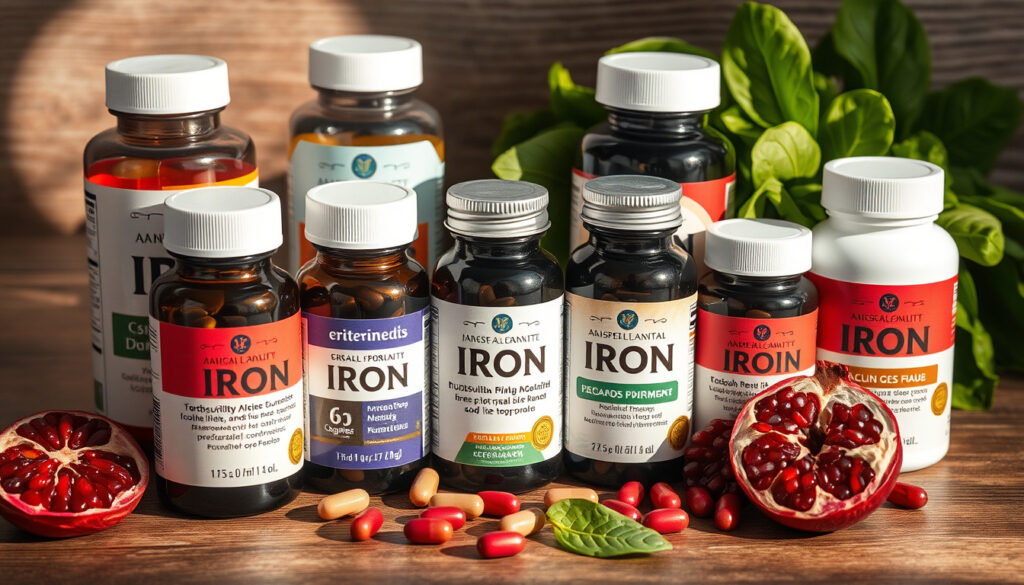
Best Iron Supplements for Women: Top Picks Reviewed
If you’ve ever finished a full pack of iron tablets only to still feel exhausted, you’re not imagining it — some forms of iron barely get absorbed before they reach your gut. That’s exactly why nutritionists and pharmacists keep pointing women toward gentler, better-absorbed formulas instead of the standard over-the-counter options that sit badly and work poorly.
RDA for women 19-50: 18 mg/day · Top dose listed: 65 mg (Nutricost) · Common form: Capsules · Gentle option: Holland & Barrett 20mg
Quick snapshot
- Active Iron delivers 25mg per capsule with clinically proven 2X better absorption (Active Iron)
- Ferrous bisglycinate chelate causes less stomach upset than standard ferrous sulfate (Healthline)
- Women with heavy periods face higher risk of iron deficiency anemia per HSE Ireland guidance (HSE Ireland)
- Specific clinical study dates and full trial data for Active Iron claims
- Direct HSE endorsements of specific supplement brands
- Regional price variations across Ireland for premium brands
- Healthline and BBC Good Food updated their iron supplement reviews for 2026 (Healthline, BBC Good Food)
- HSE publishes ongoing iron deficiency guidance for women (HSE Ireland)
- Active Iron maintains clinical study evidence on its site (Active Iron)
- Irish pharmacies expanding gentle-iron ranges as demand grows (Meaghers Pharmacy)
- Bisglycinate formulations gaining ground over older sulfate forms (Metagenics Ireland)
- Vitamin C pairings becoming standard recommendation from nutritionists (Women’s Health Mag)
| Factor | Detail |
|---|---|
| Primary form | Capsules or liquid |
| Top RDA women | 18 mg |
| Anemia treatment | Ferrous fumarate |
| Gentle dose example | 20 mg (Holland & Barrett Gentle Iron) |
| Highest absorption form | Ferrous bisglycinate chelate |
| Liquid option | Spatone (1 sachet adults, 2 sachets pregnant) |
| Active Iron Boots price | €25.99 for 30 capsules + 30 tablets |
What is the best iron supplement to take for women?
Choosing an iron supplement isn’t just about grabbing whichever bottle is cheapest — the form of iron matters enormously for how well your body absorbs it and whether you’ll end up with a queasy stomach before the bottle is half empty. Nutritionist-tested options consistently beat standard pharmacy picks when it comes to both efficacy and tolerability.
Top overall picks
- Active Iron For Women — 25mg capsule with a protein coat that protects against gut irritation and delivers 2X better absorption than standard formulations. Active Iron increases iron levels by 94% in clinical data (Active Iron). Available at Boots Ireland for €25.99 (30 capsules + 30 tablets) (Boots Ireland).
- Metagenics Iron Bisglycinate — 28mg per capsule of highly absorbable ferrous bisglycinate, gentle on digestion with added active folate. This form is preferred over ferrous sulfate for sensitive stomachs (Metagenics Ireland).
- Women’s Best Gentle Iron — 25mg capsules optimized for sensitive digestive systems, helping reduce fatigue without the common GI side effects (Women’s Best Ireland).
Key factors for women
Women need 18mg of iron daily, but heavy menstrual bleeding can push requirements far higher — and many diets don’t close the gap. The HSE Ireland guidance specifically flags women with heavy periods as higher risk for iron deficiency anemia and advises consulting a GP or dietitian.
Ferrous bisglycinate chelate causes significantly less stomach upset than ferrous sulfate, the form most commonly found in budget iron supplements — making the difference between finishing a course and abandoning it halfway.
Expert-tested options
BBC Good Food testers ranked Holland & Barrett Gentle Iron 20mg as a recommended gentle option (BBC Good Food), while Healthline’s dietitian-reviewed guide for 2026 highlights Pure Encapsulations Iron Liquid (15mg per 5mL) for its SunActive Fe technology and lack of GI issues (Healthline).
The pattern is clear: women who experience bloating or constipation with standard iron typically do well switching to bisglycinate or protein-coated formulations, both of which avoid the that irritates the gut lining.
What is the best iron supplement for anemia?
When blood tests confirm anemia, the stakes are higher — you need something that actually works, not just a supplement that passes through without being absorbed. Treatment-strength iron requires higher doses and better bioavailability than daily maintenance formulas.
High-dose options
Nutricost Iron 65mg offers the highest over-the-counter dose available, making it a frequent pick for diagnosed iron deficiency anemia alongside ferrous fumarate formulations. However, high-dose ferrous sulfate is notorious for causing constipation and nausea — side effects that tank compliance rates.
Ferrous fumarate details
Ferrous fumarate is one of the most concentrated iron salts and is commonly prescribed for iron deficiency anemia treatment. It delivers more elemental iron per tablet than other forms, but the same GI tolerance issues apply. The Irish Nutrition and Dietetic Institute notes that women are particularly at risk due to menstrual blood loss and diets lacking sufficient iron-rich foods.
Anemia-specific formulas
Active Iron’s clinical data shows a 94% increase in iron levels, with 4X better compliance due to reduced side effects — a significant advantage when treating anemia requires consistent daily supplementation over months. Meaghers Pharmacy endorses it specifically for women dealing with tiredness and low red blood cell support (Meaghers Pharmacy).
What this means: if your GP has diagnosed anemia, pushing through the discomfort of standard iron supplements isn’t necessary — gentler, better-absorbed alternatives exist that actually get the job done without the bathroom troubles.
What are 5 signs of low iron?
Iron deficiency doesn’t announce itself with dramatic symptoms — it creeps in through fatigue, pale skin, and shortness of breath that are easy to dismiss as just being busy or stressed. Recognizing these signs early can prevent progression to full-blown anemia.
Common symptoms
- Persistent tiredness — feeling exhausted even after a full night’s sleep, often the first and most overlooked sign
- Pale skin and brittle nails — reduced hemoglobin makes skin look washed out and nails chip more easily
- Shortness of breath — climbing stairs or exercising leaves you gasping when iron-fueled hemoglobin can’t deliver enough oxygen
- Strange cravings — pica, or craving non-food items like ice or dirt, is a classic iron-deficiency indicator
- Headaches and dizziness — insufficient oxygen to the brain triggers frequent headaches
When to test levels
The HSE advises that women with heavy periods should be particularly vigilant and consider discussing iron testing with their GP. A simple blood test checking ferritin (stored iron) and hemoglobin levels can confirm whether low iron is behind your symptoms.
Many women attribute fatigue to busy lifestyles when an iron deficiency is actually the culprit — a ferritin test costs little and takes minutes, yet it’s rarely requested unless patients speak up.
The catch: you can’t self-diagnose iron deficiency reliably from symptoms alone — the only way to confirm and target treatment appropriately is through blood testing ordered by a healthcare provider.
What boosts iron immediately?
Taking an iron supplement is only part of the equation — what you take it with, and when you take it, dramatically affects how much your body actually absorbs. A few simple tweaks can double the iron your body puts to use.
Quick absorption aids
Vitamin C is iron’s best friend: taking your supplement with orange juice, lemon water, or a vitamin C tablet can triple iron absorption by converting ferric iron into the more readily absorbed ferrous form. Avoid taking iron with tea, coffee, milk, or calcium supplements — the tannins, phytic acid, and calcium all block absorption (Healthline).
Haem iron sources
Haem iron from animal sources (red meat, liver, shellfish) absorbs 2-3 times more efficiently than plant-based non-haem iron (BBC Good Food), though plant-based options remain essential for vegetarian and vegan diets. Combining plant iron sources with vitamin C dramatically closes the absorption gap.
Taking Active Iron on an empty stomach 30 minutes before meals maximizes absorption, though Women’s Health Mag recommends pairing with vitamin C regardless of timing (Women’s Health Mag).
The implication: most people taking iron supplements without vitamin C pairing are essentially flushing money down the drain — the combination is so effective that splitting your dose and pairing each half with citrus juice is a legitimate strategy.
What is the best iron supplement for sensitive stomach?
For women who have tried standard iron supplements and abandoned them due to nausea, constipation, or general gut misery, the solution isn’t suffering through the discomfort — it’s switching forms entirely. Several formulations are specifically engineered to bypass the digestive complaints that derail supplementation.
Gentle formulas
- Holland & Barrett Gentle Iron 20mg — uses a gentler iron form that causes significantly less stomach upset than ferrous sulfate. BBC Good Food specifically recommends it for sensitive stomachs (BBC Good Food).
- Spatone — a liquid iron sachet containing iron-rich water from spa towns, gentler on digestion than tablet forms. One sachet daily for adults, two sachets for pregnant women (Women’s Health Mag).
- Pure Encapsulations Iron Liquid — 15mg per 5mL using SunActive Fe technology, highly bioavailable and formulated to avoid GI issues like constipation (Healthline).
No constipation options
Ferrous sulfate commonly causes constipation, but iron bisglycinate chelate is advised over standard forms to avoid this issue (Women’s Health Mag). Pairing with fiber, probiotics, and continued vitamin C supplementation further reduces GI side effects.
Boots stocks several gentle iron supplements formulated to support energy levels without stomach upset, and Boots Ireland specifically carries Active Iron For Women as a stomach-friendly option (Boots).
Gentle iron formulas cost more than standard ferrous sulfate — but for women who’ve abandoned iron supplementation entirely because of side effects, the price difference is irrelevant when the alternative is not taking it at all.
The pattern: women with sensitive stomachs shouldn’t settle for suffering through standard iron — switching to protein-coated capsules or liquid forms eliminates the most common complaints without sacrificing absorption.
Supplement comparison
Five products, three key criteria: the gap between gentle formulas and budget options is significant on tolerability while smaller on price.
| Product | Iron Form | Dose | Key Benefit | Price Indicator |
|---|---|---|---|---|
| Active Iron For Women | Protein-coated ferrous sulfate | 25mg | 2X better absorption, minimal GI side effects | €25.99 (Boots Ireland) |
| Nutricost Iron | Ferrous sulfate | 65mg | Highest OTC dose for diagnosed anemia | Budget tier |
| Holland & Barrett Gentle Iron | Gentle-release iron | 20mg | Fewer stomach complaints | Mid-range |
| Metagenics Iron Bisglycinate | Ferrous bisglycinate chelate | 28mg | Superior bioavailability, added folate | Premium |
| Spatone Liquid | Water-soluble iron | 1-2 sachets | Gentlest on digestion, pregnancy-safe | Mid-range |
These five products represent the range from budget high-dose options to premium gentle formulations, with Active Iron sitting in the middle as a clinically tested middle ground.
Product specifications
Six products, seven specification points: the data shows clear trade-offs between dose strength, absorption quality, and GI tolerability.
| Product | Form | Dose | Absorption | Tolerability | Added Ingredients | Availability |
|---|---|---|---|---|---|---|
| Active Iron | Capsule | 25mg | 2X better | High (protein coat) | Vitamin C pairing included | Boots, pharmacies |
| Nutricost Iron | Capsule | 65mg | Standard | Low (common constipation) | None | Online, health stores |
| Holland & Barrett Gentle | Capsule | 20mg | Moderate | High | None | Holland & Barrett stores |
| Metagenics Bisglycinate | Capsule | 28mg | Superior | High | Active folate | Pharmacies, online |
| Spatone | Liquid sachet | Varies (1-2 daily) | Good | Very high | Natural spa water minerals | Pharmacies, Boots |
| Pure Encapsulations Liquid | Liquid | 15mg/5mL | High (SunActive Fe) | High | None | Online, specialists |
When comparing across all six products, absorption and tolerability tend to trade off against price, with liquid and bisglycinate forms scoring highest on gut comfort.
Upsides
- Bisglycinate and protein-coated forms dramatically reduce nausea and constipation
- Vitamin C pairing triples absorption regardless of iron form chosen
- Active Iron’s 94% iron increase validated in clinical data
- Liquid options like Spatone suitable for pregnant women (2 sachets daily)
- Irish pharmacies like Boots, Meaghers, and Metagenics stock tested options locally
- Ferrous fumarate remains effective and affordable for diagnosed anemia treatment
Downsides
- Premium gentle formulas cost significantly more than standard ferrous sulfate
- High-dose iron (Nutricost 65mg) commonly causes constipation without tolerance management
- Ferrous sulfate still dominates budget supplement shelves despite poor tolerability
- Regional price variations across Ireland make direct comparisons difficult
- Long-term safety data for sensitive stomach users remains limited
- Blood testing required for accurate self-assessment — symptoms alone are unreliable
“Active Iron’s unique formula is proven to provide 2X better absorption.”
— Meaghers Pharmacy (Irish Pharmacy)
“Liquid iron is often gentler on digestion, making it a good option for those with absorption issues or sensitive stomachs,” says Hoath, nutritionist.
— Women’s Health Mag (Nutritionist-reviewed guidance)
Bottom line: Women with heavy periods face genuine iron deficiency risk that diet alone often can’t close. The evidence points clearly to bisglycinate and protein-coated formulations as the most effective way to raise iron levels without the digestive side effects that cause most women to abandon supplementation entirely.
For women with sensitive stomachs who’ve given up on iron supplements, the choice is straightforward: switch to ferrous bisglycinate chelate or a protein-coated formula like Active Iron, pair every dose with vitamin C, and take it on an empty stomach 30 minutes before eating. Those with diagnosed anemia should work with their GP on dose and form — Nutricost’s 65mg ferrous sulfate option exists for a reason, but shouldn’t be the first choice for anyone already struggling with GI tolerability.
How much iron do women need daily?
The recommended dietary allowance for women aged 19-50 is 18mg per day. Pregnant women need more (27mg), while postmenopausal women can drop to 8mg. Women with heavy periods often need supplementation beyond the RDA baseline.
Can iron supplements cause constipation?
Yes — standard ferrous sulfate formulations are notorious for causing constipation, nausea, and digestive discomfort. Switching to ferrous bisglycinate chelate, protein-coated capsules like Active Iron, or liquid iron options like Spatone dramatically reduces these side effects while maintaining or improving absorption.
What vitamin helps iron absorption?
Vitamin C is the most effective absorption aid — it converts ferric iron into the more readily absorbed ferrous form and can triple uptake when taken together. Orange juice, lemon water, or a vitamin C supplement taken with your iron dose significantly improves results.
Are liquid iron supplements better?
Liquid iron supplements like Spatone and Pure Encapsulations Iron Liquid are generally gentler on digestion and absorb well when taken with vitamin C. They’re particularly suited for pregnant women and those with sensitive stomachs, though they typically deliver lower doses per serving than capsule options.
How long to take iron supplements?
Iron supplementation for deficiency typically requires 3-6 months of consistent use before iron stores (ferritin) normalize. Stopping too early after symptoms resolve can lead to relapse. Blood testing at the 3-month mark confirms whether continued supplementation is needed.
Who should avoid iron supplements?
Individuals with hemochromatosis (iron overload disorder) should avoid iron supplementation entirely. Those with chronic inflammatory conditions, liver disease, or certain infections should consult a doctor before taking iron. Some supplements may interact with medications including antibiotics and proton pump inhibitors.
What foods pair with iron pills?
Vitamin C-rich foods like citrus, bell peppers, and strawberries dramatically boost iron absorption when eaten with supplements. Avoid pairing iron with tea, coffee, dairy products, or high-calcium foods — all inhibit absorption significantly.
Related reading: Ferrous Fumarate 300 mg · Signs of Kidney Failure
Beyond supplements like Active Iron, iron-rich foods for women help meet daily needs through diet, especially amid menstrual losses and pregnancy demands.
More related posts
 Leviathan at Canada’s Wonderland: Height, Speed, G-Force & Scary
 55 CAD to USD – Current Rate and Historical Trends
 When Is Mother’s Day Canada 2025? Date, History & More
 Christopher Columbus: Biography, Voyages, Controversy & Facts
 CM Stock Price TSX Today: CIBC Buy or Sell Forecast
 Ind W vs SA W – 6-Wicket Win Seals 3-0 Series Sweep
 Is Sofia Coppola a Nepo Baby? Career and Relationships
 Cal Foote: Acquitted, Signed, Back to Hockey in 2025