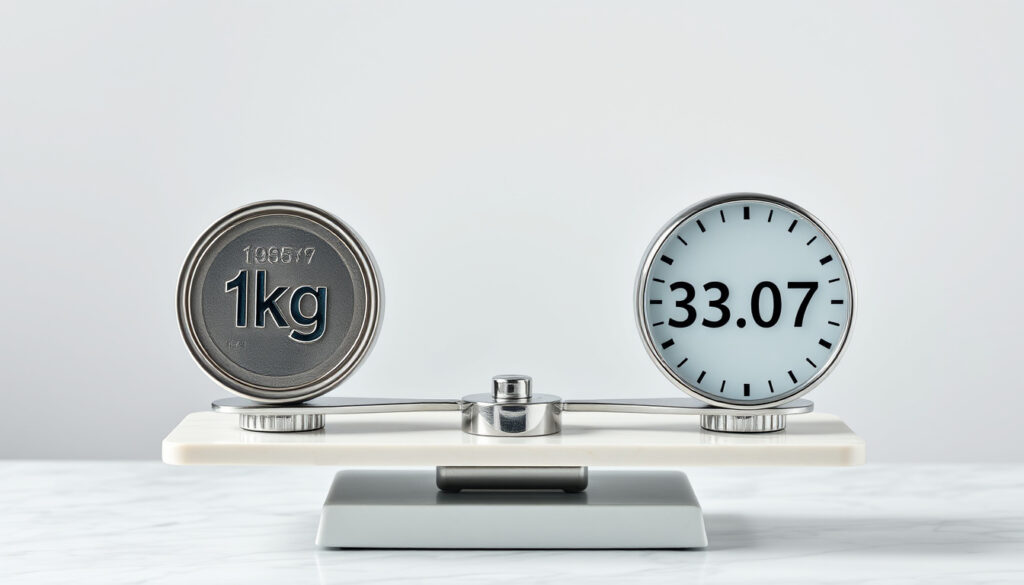
15 kg to lbs – The Exact 33.07 Pounds Conversion Guide
15 kg to lbs: 33.07 Pounds
Fifteen kilograms converts to approximately 33.07 pounds. This figure represents one of the most frequently needed weight conversions for travelers, fitness enthusiasts, and anyone working across metric and imperial measurement systems. Understanding the precise relationship between these units matters more than many people realize.
The conversion rests on an internationally agreed-upon formula that has been standardized since 1959. Whether you are checking luggage limits, comparing body weight measurements, or calculating shipping costs, knowing exactly how 15 kg translates to pounds ensures accuracy in everyday situations.
How Many Pounds is 15 kg?
When converting 15 kilograms to pounds, the exact result is 33.0693393277 pounds. For most practical purposes, this rounds to 33.07 pounds or simply 33 pounds. The slight difference between the rounded and exact figures rarely impacts daily activities, but precision becomes important in scientific, commercial, or regulatory contexts.
The overview above captures the essential data at a glance. The metric value identifies the starting point, the imperial result shows the destination unit, the formula enables manual calculation, and the use case context suggests practical applications.
- 15 kg equals approximately 33 pounds when rounded to the nearest whole number
- The exact conversion yields 33.0693393277 pounds using the standard factor
- The base conversion factor is 1 kg = 2.2046226218 pounds
- This weight commonly appears in airline luggage allowances and fitness equipment
- The reverse calculation shows 15 lbs converts to roughly 6.8 kg
- For everyday use, 33 lbs or 33.1 lbs provides sufficient accuracy
| Kilograms (kg) | Pounds (lb) | Notes |
|---|---|---|
| 15 kg | 33.07 lbs | Standard approximation |
| 15 kg | 33 lbs 1 oz | Detailed breakdown |
| 1 kg | 2.20462 lbs | Base conversion factor |
How to Convert kg to lbs
Converting kilograms to pounds requires multiplying by the conversion factor 2.2046226218. This number derives from the international definition of the pound as exactly 0.45359237 kilograms, a standard codified by the National Institute of Standards and Technology in 1959. The calculation itself is straightforward: take your kilogram value and multiply by this factor.
For 15 kilograms specifically, the calculation proceeds as follows: 15 × 2.2046226218 = 33.0693393277 pounds. Many users round this result to 33.07 pounds for practical applications, while others round even further to 33 pounds when extreme precision is unnecessary.
The Conversion Formula
The standard formula for kg to lbs conversion is: pounds = kilograms × 2.2046226218. This formula works in both directions when inverted: kilograms = pounds × 0.45359237. Both approaches produce identical results when applied correctly, giving users flexibility depending on which unit they start with. You can verify any result using the RapidTables kg to pounds calculator, which applies the same international standard.
The conversion factor 2.2046226218 comes from the legal definition of the pound in the United States. Since 1959, the avoirdupois pound has been officially defined as exactly 0.45359237 kilograms. This fixed relationship ensures consistency across all conversions, whether performed manually, digitally, or using specialized conversion tools.
Quick Mental Math Approximation
For situations where a calculator is unavailable, approximating with 2.2 as the multiplier provides reasonable accuracy. Using this simpler factor: 15 × 2.2 = 33.0 pounds. The difference from the exact value is approximately 0.07 pounds, or about 1.1 ounces. This margin falls well within acceptable tolerance for most non-technical purposes. For a broader range of quick estimates, the Metric Conversions kilograms to pounds table covers common weights in both directions.
Exact 15 kg to lbs Conversion
The precise conversion of 15 kilograms yields 33.0693393277 pounds. Breaking this down into pounds and ounces provides additional utility: 33 pounds and 1.109 ounces. This granular detail proves valuable when working with smaller measurements or when regulatory standards require exact figures.
The relationship between pounds and ounces follows a simple rule: one pound contains exactly 16 ounces. Applying this to the conversion, 15 kilograms equals 529.11 ounces total. Dividing by 16 confirms the 33 pounds plus fractional ounce result.
Breaking Down the Calculation
When precision matters, the step-by-step approach reveals the mathematical foundation. Starting with the international agreement that 1 pound equals 0.45359237 kilograms, we derive the reciprocal to find 1 kilogram equals approximately 2.2046226218 pounds. Multiplying 15 by this factor produces the exact result. The UnitConverters weight and mass tool implements this same definition for users who prefer a digital reference.
For airline luggage, rounding to 33 pounds works perfectly. For scientific or medical contexts, use the full 33.069 pounds. For shipping declarations, two decimal places (33.07 lbs) typically satisfy customs requirements while remaining manageable.
Historical Standards Behind the Numbers
The kilogram served as a physical artifact for over a century, defined by a platinum-iridium cylinder housed at the International Bureau of Weights and Measures in France. In 2019, this definition transitioned to rely on the Planck constant, ensuring the unit remains stable and universally reproducible without physical reference objects. The Bureau International des Poids et Mesures oversees this definition and publishes the authoritative SI unit standards used globally.
The pound’s definition similarly evolved through international agreements. The 1959 accord between the United States and countries of the Commonwealth established the current conversion factor, replacing varying local definitions that had produced slight differences across regions.
Related kg to lbs Conversions
Understanding how 15 kg relates to nearby weight values helps contextualize the conversion within the broader measurement landscape. Common conversions cluster around luggage limits, fitness equipment, and everyday objects, making practical comparisons immediately useful.
| Kilograms (kg) | Pounds (lb) | Pounds + Ounces |
|---|---|---|
| 5 kg | 11.023 lb | 11 lb 0.370 oz |
| 10 kg | 22.046 lb | 22 lb 0.740 oz |
| 15 kg | 33.069 lb | 33 lb 1.109 oz |
| 20 kg | 44.092 lb | 44 lb 1.479 oz |
| 25 kg | 55.115 lb | — |
The Reverse Conversion: 15 lbs to kg
For those working with pounds as the starting point, the inverse calculation matters equally. Fifteen pounds converts to approximately 6.8039 kilograms using the formula: pounds × 0.45359237. This value represents a useful cross-reference for anyone accustomed to one system but needing values in the other.
Practical Applications
Airlines frequently establish checked bag limits at 23 kg (approximately 50.7 pounds) or 32 kg (about 70.5 pounds). Carry-on allowances commonly cap at 10 kg (22 pounds) or 15 kg (33 pounds). A 15 kg bag sits comfortably within most economy allowances, making this weight a practical reference point for travelers. You can review specific baggage policies in our guide to Air Canada Baggage Weight Limits.
Fitness applications frequently encounter the 15 kg mark. Dumbbells and barbells in this weight class serve intermediate strength training needs. Converting between systems helps athletes compare training programs or equipment specifications regardless of the measurement context. Similarly, shipping providers like USPS and FedEx set parcel limits at 70 pounds (approximately 31.75 kg), placing 15 kg well within standard shipping parameters. The Calculator.net kg to lbs tool offers a convenient way to check additional weight values across both systems.
Key Milestones in Measurement Standards
The modern conversion between kilograms and pounds rests on foundations laid over centuries. Understanding this history clarifies why the current standards exist and how they achieve their remarkable consistency.
- 1883: The International Prototype of the Kilogram established as the primary reference for mass measurement worldwide
- 1959: United States formally adopts the international pound definition of exactly 0.45359237 kilograms
- 2019: Kilogram redefined using the Planck constant, replacing the physical artifact with a fundamental physical constant
- Present: Both definitions ensure universal reproducibility through fixed mathematical relationships rather than physical objects
Precision vs. Approximation
Not all contexts demand the same level of precision. Distinguishing between situations that require exact figures and those where approximations suffice helps users apply conversions appropriately.
The exact conversion of 15 kg equals 33.0693393277 pounds, derived from the fixed international definition where 1 kg = 2.2046226218 lb.
For routine use, 33 pounds or 33.1 pounds provides sufficient accuracy without requiring decimal precision beyond practical needs.
Understanding the Units
The kilogram belongs to the International System of Units, serving as the SI base unit of mass. It represents a fundamental measurement used globally for scientific, commercial, and everyday purposes. The pound, by contrast, belongs to the US customary system, though it also sees use in United Kingdom contexts where regulatory and commercial practices still reference imperial units.
These systems developed independently, creating the need for conversion factors. The ratio of approximately 2.2 reflects the proportional difference between these two fundamentally different scales, established through international treaty and maintained through metrological institutions worldwide. For a broader comparison of unit systems and their historical development, the Encyclopædia Britannica entry on the pound provides useful background on how this unit evolved across countries.
Sources and References
The conversion data presented here draws from internationally recognized standards bodies and conversion tools that implement official definitions:
- National Institute of Standards and Technology (NIST) for US customary unit definitions
- Bureau International des Poids et Mesures (BIPM) for SI unit standards
- International yard-pound agreement for conversion factor standardization
For additional measurement conversions, explore our resources on 6 Inch to CM Conversion or return to our kg-to-lbs converter for other weight calculations.
Summary
Fifteen kilograms converts to 33.0693393277 pounds using the standardized conversion factor of 2.2046226218. For practical purposes, this rounds to 33 pounds or 33.07 pounds depending on required precision. The conversion applies consistently across all contexts, from airline baggage policies to scientific measurements, ensuring reliable results regardless of application. Understanding this relationship between metric and imperial units enables accurate communication and decision-making across measurement systems.
Frequently Asked Questions
What is 15 lbs in kg?
Fifteen pounds equals approximately 6.8039 kilograms. The conversion formula divides pounds by the factor 0.45359237, producing this result consistently.
How accurate is rounding 15 kg to 33 pounds?
Rounding 15 kg to 33 pounds introduces an error of approximately 1.1 ounces, which falls within acceptable tolerance for most non-technical applications including travel and everyday comparisons.
What is 15 kg in pounds and ounces?
Fifteen kilograms equals 33 pounds and 1.109 ounces. This breakdown proves useful when scale displays show ounces rather than decimal pounds.
How does the 15 kg conversion compare to common luggage limits?
At 33 pounds, a 15 kg bag fits comfortably within most airline carry-on allowances that cap at 33 pounds. For checked bags, it represents less than half the typical 70-pound limit.
Why does the conversion factor have so many decimal places?
The extensive decimal places ensure precision matches the official definition of the pound as exactly 0.45359237 kilograms. Using fewer places would introduce measurable error in calculations requiring high accuracy.
More related posts
 Cast of Fear Street Prom Queen – Full Cast List and Roles
 Lance Stroll: F1 Career, Wins, Condition, and Ethnicity
 Cast of Madagascar 2005 – Full Voice Actors List
 Prairies Winter Storm Warnings – Latest Snow and Travel Alerts
 Freya Skye: Age, Fame, Ethnicity, and Tour Details
 Upside Down Smiley Emoji 🙃: Meaning, Flirting & Copy Paste
 Most Famous Person in the World – Polls, Followers and Rankings
 PlayStation Wrap Up 2025 – Release Date and Access Guide