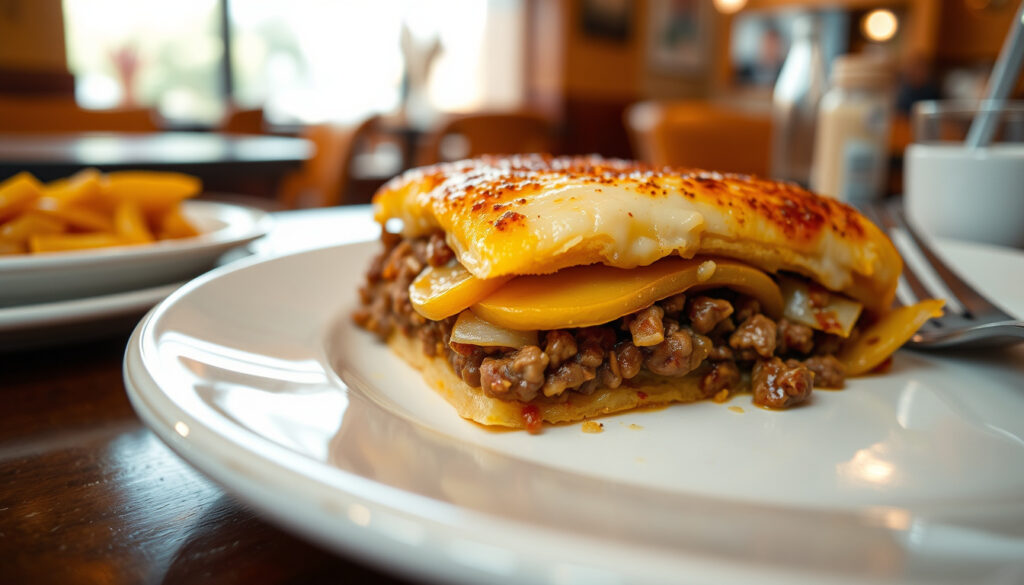
Best Pastelón Near Me: Top Restaurants & Essential Facts
There’s a moment at a Puerto Rican restaurant when you see “pastelón” on the menu and wonder—plantain lasagna? Yes, exactly. This layered casserole trades pasta for sweet ripe plantains, stacking them with seasoned meat and cheese until it’s bubbly and golden.
Origin: Puerto Rico · Main ingredient: Ripe plantains · Typical storage: 4–5 days in refrigerator · Layers: 3–4 · Similar to: Italian lasagna
Quick snapshot
- Pastelón is a Puerto Rican layered casserole made with sweet plantains, ground meat, and cheese (YouTube cooking channel).
- It is commonly called plantain lasagna (YouTube cooking channel).
- The exact date when pastelón was first created is not documented.
- Whether pastelón predates Italian lasagna is uncertain.
- The dish typically has 3–4 layers and is baked until the cheese melts and plantains caramelize — exact counts vary by recipe.
- 19th–20th century: Pastelón develops in Puerto Rico, influenced by Spanish cuisine and local plantain abundance.
- Pastelón is increasingly available for delivery in U.S. cities via platforms like Uber Eats.
Six quick facts that tell the story of pastelón at a glance.
| Attribute | Value |
|---|---|
| Origin | Puerto Rico |
| Main ingredient | Ripe plantains |
| Similar to | Italian lasagna |
| English name | Plantain lasagna |
| Refrigerator storage | 4–5 days |
| Typical layers | 3–4 |
Knowing the basics helps you spot authentic pastelón on a menu. If it’s not made with ripe plantains and layered like lasagna, you’re probably eating something else.
What is a pastelón in English?
Pastelón translates directly to plantain lasagna — a name that stuck because of its layered structure. Like its Italian cousin, pastelón alternates layers of a starchy base (sweet ripe plantains) with savory filling (seasoned ground beef or pork) and cheese, then bakes until golden.
What is another name for pastelón?
- Plantain lasagna
- Pastelón de plátano maduro (Spanish, meaning ripe plantain pastelón)
How many layers are in a pastelon?
Most versions use 3–4 layers of fried or baked plantains, alternated with meat and cheese. The top layer is often extra cheese for a bubbly crust.
The pattern: Traditional pastelón keeps it modest—three layers of plantains is standard. Four layers signals a generously stacked casserole, often found in restaurants.
What country does pastelón come from?
Pastelón originated in Puerto Rico. It also appears in the Dominican Republic and other Caribbean nations, but its roots are firmly Puerto Rican, shaped by Spanish and African culinary traditions.
Dominican versions often use a slightly different filling (sometimes adding raisins or olives), so knowing the origin helps you choose what you’re in the mood for.
Is pastelón Puerto Rican or Dominican?
Both, but the dish is first documented in Puerto Rico. Dominican pastelón tends to be sweeter and may include extra ingredients like capers or green beans.
What this means: If you’re seeking authenticity, a Puerto Rican restaurant’s pastelón will be the most traditional version. Dominican variations are delicious but depart from the original blueprint.
What is pastelón similar to?
- Italian lasagna (same layering concept, different base)
- Moussaka (Greek baked casserole with eggplant instead of pasta)
- Pastelón de yuca (a variation using cassava)
How is pastelón different from Italian lasagna?
The differences between these two comfort classics come down to a few key variables.
| Aspect | Pastelón | Italian lasagna |
|---|---|---|
| Base | Sweet ripe plantains | Pasta sheets |
| Flavor profile | Sweet-savory, caramelized | Savory, tomato-herb forward |
| Cheese | Typically mozzarella or cheddar | Ricotta, mozzarella, Parmesan |
| Origin | Puerto Rico | Italy |
Three key differences, one takeaway: pastelón is sweeter and starchier because of the plantains, while lasagna relies on pasta and tomato sauce. Both are comfort classics.
Are plantains healthier than bananas?
Plantains are starchier and lower in sugar than dessert bananas. They are also a good source of fiber, vitamin C, and potassium. However, pastelón is calorie-dense due to cheese and meat.
The trade-off: Plantains offer better satiety and more resistant starch, making pastelón a filling meal. But it’s not a low-calorie dish.
How long does pastelón last in the fridge?
Pastelón keeps for 4–5 days in an airtight container in the refrigerator. For longer storage, freeze it for up to 3 months.
Can you freeze pastelón?
Yes. Wrap the cooled casserole tightly in plastic wrap then foil, or use a freezer-safe container. It thaws well and reheats best in the oven.
How to reheat pastelón properly?
- Oven: 350°F for 15–20 minutes (crisps the top).
- Microwave: 2–3 minutes on medium, but texture may soften.
- Air fryer: 350°F for 8–10 minutes for a crunchy edge.
The implication: Oven reheating preserves the contrast between creamy plantains and melted cheese. Microwaving turns it mushy, but it’s faster.
The answer depends on your city, but these platforms and signals can lead you to authentic options.
Where can I find the best pastelón near me?
Top-rated pastelón restaurants in New York City
Yelp lists Casa Adela and The Freakin Rican as top pastelón spots in New York. Both are Puerto Rican restaurants known for generous portions and traditional preparation.
Ordering pastelón delivery via DoorDash
DoorDash offers pastelón delivery in multiple U.S. cities. Search for “pastelon” (without accent) to catch listings that omit diacritics. The same hyperlocal search approach works for finding other services, from pet grooming near me to specialty grocery items.
The pattern: Delivery platforms are the fastest way to find pastelón near you, but always check the menu photos and recent reviews to confirm quality.
Upsides
- Unique sweet-savory flavor
- Great for feeding a crowd
- Freezes and reheats well
- Gluten-free (using plantains)
Downsides
- Calorie-dense
- Hard to find outside Puerto Rican communities
- Variations can mislead (some use green plantains)
- Requires verification on delivery apps
“I love Puerto Rican food and so far, pastelon is my favorite. I’ll eat a whole tray way too fast.”
Reddit user in r/PuertoRicoTravel
“Pastelón, also known as ‘plantain lasagna,’ is a popular dish in Puerto Rico and the Dominican Republic.”
Simply Recipes
For dine-in, check Yelp for restaurants like Casa Adela or El Gigante Dormido in Bayamón. For delivery, use Uber Eats or DoorDash with the right spelling. For another baked comfort food that’s easy to make at home, check out this no knead bread recipe.
Pastelón offers a distinct sweet-savory experience that sets it apart from other comfort foods. For diners seeking something beyond ordinary lasagna, this Puerto Rican classic delivers a layered warmth worth tracking down.
Frequently asked questions
Is pastelón vegan?
Traditional pastelón contains meat and cheese, but vegan versions use plant-based meat and dairy-free cheese.
What cheese is best for pastelón?
Mozzarella is the most common—it melts well and doesn’t overpower. Cheddar is also used for a sharper flavor.
Can I make pastelón with green plantains?
Yes, but it changes the texture and sweetness. Green plantains are starchier and less sweet, resulting in a more savory dish.
How many calories are in a serving of pastelón?
A typical serving (about 1/6 of a 9×13 pan) ranges from 400–600 calories, depending on the meat and cheese.
Does pastelón contain gluten?
Traditional pastelón is naturally gluten-free because it uses plantains instead of pasta or wheat. But check fillings for soy sauce or breadcrumbs.
What meat is traditionally used in pastelón?
Ground beef is most common; ground pork is also used. Some recipes add chorizo for extra flavor.
How do I reheat pastelón without drying it out?
Cover with foil and reheat at 325°F for 15 minutes, then uncover for 5 minutes to crisp the top.
More related posts
 Spider-Man: Beyond the Spider-Verse Release, Plot & Delay
 Cheap Flights to Montreal from Dublin: €310 Deals
 Most Famous Person in the World – Polls, Followers and Rankings
 The Worst Person in the World: Reviews & Where to Watch
 Nike Shoes for Men – Best 2024 Picks for Running and Comfort
 Zac Efron Plastic Surgery: Jaw Accident Truth Revealed
 Yellow Wind Warning: Meaning, Safety & Travel Advice
 100 CAD to INR: Live Converter, Rates, Forecast & Trends